 X078
Warehouse Safety and Organization: Load Capacity, Racking, and Forklifts
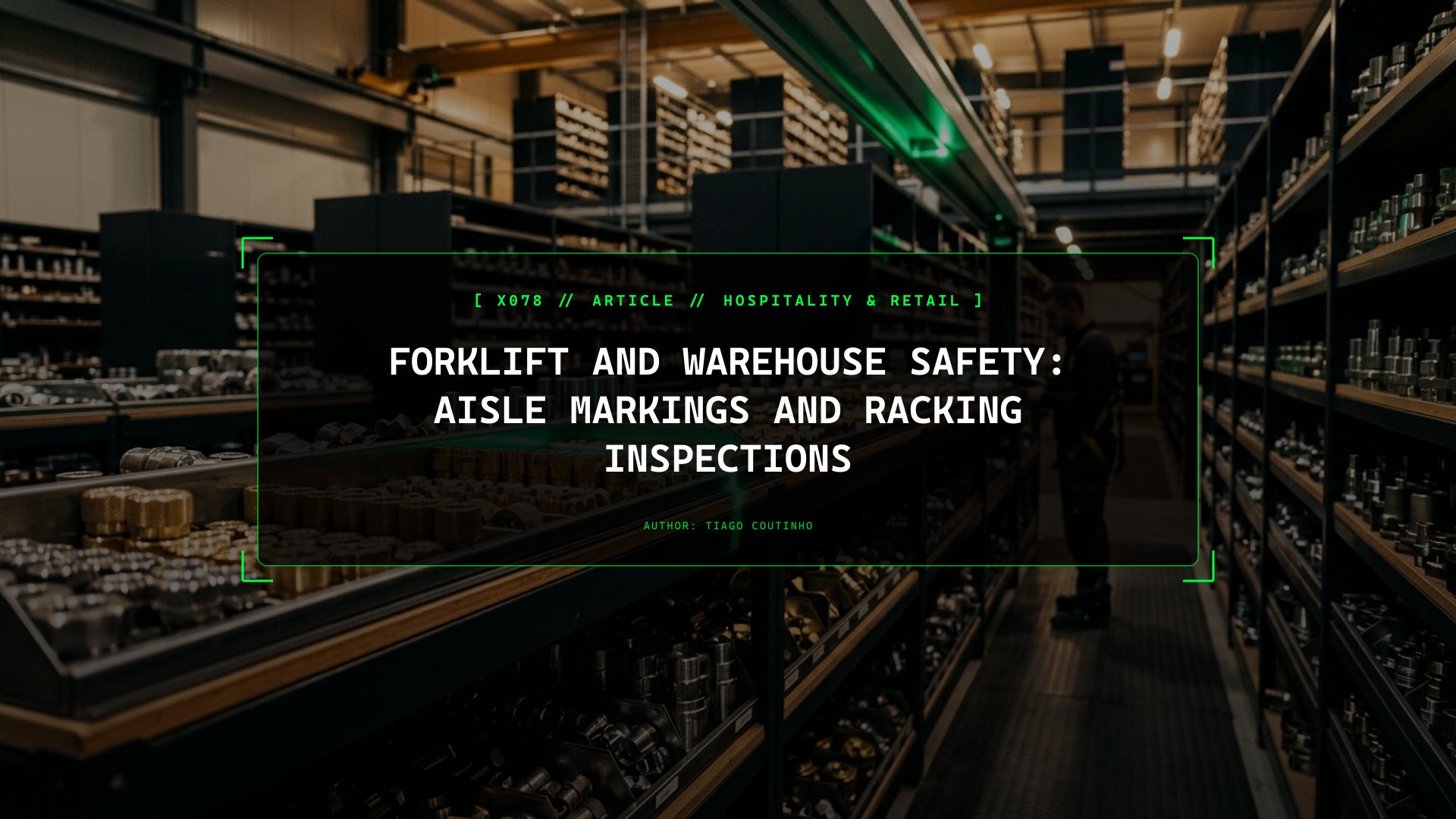
Step inside the fulfillment depot or backroom warehouse of an average small-to-medium retail hardware merchant, building supplier, or distribution hub, and you will frequently witness an accident waiting to happen.
Heavy steel pallet racks rise five meters toward the corrugated metal ceiling, laden with thousands of kilograms of tile adhesive, power tools, and metal fittings. On several lower upright frames, visible dents and twisted steel channels bear witness to previous impacts from counterbalanced forklift tines. Pallets of differing sizes are haphazardly stacked three levels high with zero weight-limit signage, while warehouse pickers on foot weave between reversing forklifts with zero spatial separation.
When asked when the racking was last inspected by a certified structural engineer, the warehouse manager laughs nervously: “Inspect? These racks are heavy industrial steel—they’re indestructible.”
They are not indestructible. In managing commercial retail and logistics facilities at Brico Bom and our physical operations, we treat warehouse safety not as an annoying regulatory compliance checklist, but as an existential operational foundation.
A single structural rack collapse or forklift-pedestrian collision incurs hundreds of thousands of euros in catastrophic inventory loss, total regulatory shutdown by labor authorities, and devastating civil liability.
Supported by structured business digitalization starter workflows and lean digitalization of facility audits, we enforce the Industrial Warehouse Safety & Visual Management Protocol.
THE EN 15635 RACKING DAMAGE RISK CLASSIFICATION
- VISUAL INSPECTION DISCOVERY
- GREEN HAZARD (Minor Blemish)
- Deformation < 3mm over 1-meter span
- Safe to operate; log in annual register
- AMBER HAZARD (Moderate Risk)
- Deformation between 3mm and 5mm
- Order replacement parts within 4 weeks
- Do NOT re-load bay once unloaded
- RED HAZARD (Critical Risk of Collapse)
- Severe crease, buckle, or weld tear
- IMMEDIATELY UNLOAD BAY WITHIN 1 HOUR
- Physically barrier-tape entire rack aisle
The Physics of Pallet Racking Collapse: Why 3mm Matters
Commercial pallet racking is engineered out of cold-formed steel sections designed with precise structural safety margins. It achieves its immense strength through vertical column alignment and diagonal cross-bracing.
When a 3.5-ton counterbalanced forklift maneuvers inside a narrow 3.2-meter aisle, an accidental tine tap against an unprotected upright generates tens of thousands of Newtons of kinetic impact force:
- An upright column dent exceeding just 3mm bends the steel out of vertical plumb alignment.
- When an eccentric vertical load of 2,000kg rests on a buckled column, compressive forces transform into lateral rotational forces.
- The damaged column buckles, transferring its entire load onto adjacent cross-beams. The structural failure cascades down the aisle in seconds, creating a catastrophic collapse that buries the entire floor under tons of falling debris.
The Three Tiers of Industrial Racking Inspection
Under European Standard EN 15635, warehouse operators must institutionalize a multi-layered inspection rhythm:
THE 3-TIER WAREHOUSE AUDIT CADENCE
- TIER 1: DAILY PRE-SHIFT OPERATOR CHECK (Informal visual walkthrough)
- Drivers verify forklift brakes, hydraulics, horn, and backup beepers
- Scan aisles for fallen items or visible structural impacts
- TIER 2: WEEKLY PRSES AUDIT (Structured mobile inspection)
- Designated Person Responsible for Storage Equipment Safety (PRSES)
- Inspects lower column guards, beam safety pins, and pallet overhangs
- Logs findings with geotagged photo tickets directly into maintenance log
- TIER 3: ANNUAL INDEPENDENT EXPERT AUDIT (Certified engineering review)
- Comprehensive laser measurement of column verticality
- Ultrasonic weld integrity checks and formal load calculation verification
- Issuance of statutory Certificate of Structural Compliance
Safety Pins: The €0.50 Part That Saves Lives
Every horizontal rack beam must be secured to the vertical frame by two steel safety locking pins. If an inattentive forklift operator lifts a pallet too high while extracting it from a lower level, the upward thrust will dislodge the beam from its teardrop connector. Without safety pins, the beam detaches instantly, spilling its entire load onto the forklift cab. Never operate a beam without verified, installed safety locking pins.
Visual Spatial Separation: The Pedestrian Highway
The primary cause of fatal industrial warehouse accidents is the intermingling of heavy material-handling equipment with foot workers. A forklift driver carrying a full two-meter-tall pallet load has near-zero forward visibility and must frequently drive in reverse, relying on blind-spot mirrors.
VISUAL WAREHOUSE FLOOR MERCHANDISING MAP
- MAIN EXPEDITION AISLE (Width: 4.5m)
- HEAVY FORKLIFT VEHICLE ZONE - 3.2m WIDTH
- Concrete polished slab | Directional travel arrows (White Epoxy)
- IMPACT-RESISTANT STEEL CRASH BOLLARDS & RAILING - 0.2m
- DEDICATED PEDESTRIAN WALKWAY - 1.1m WIDTH
- Solid Traffic Yellow Epoxy (RAL 1023) | Walking Man Stencil Icons
Transform your warehouse floor into a self-explaining visual environment:
- Dedicated Pedestrian Highway: Paint continuous 1.1-meter-wide walkways along the perimeter using heavy-duty industrial polyurethane or epoxy resin in Traffic Yellow (RAL 1023).
- Physical Crash Railings: Do not rely on paint alone at blind intersections. Install heavy-duty steel safety crash railings and yellow tubular corner column protectors anchored into the concrete foundation with expansion bolts.
- Mandatory Hi-Vis Vest Policy: No employee, delivery driver, or visiting contractor is permitted beyond the office doorway without a high-visibility fluorescent yellow vest (EN ISO 20471).
Engineered Load Capacity Signage
Operating a warehouse without visible, certified load capacity plaques is gross negligence. Forklift operators cannot guess whether a beam can support two pallets of ceramic tiles or one pallet of fiberglass insulation.
ENGINEERED LOAD CAPACITY SIGNAGE ANATOMY
- BRICO BOM LOGISTICS DEPOT - MAXIMUM LOAD SPECIFICATION
- RACK AISLE B4 | SYSTEM: EN 15635 COMPLIANT
- MAX UNIFORMLY DISTRIBUTED LOAD PER BEAM LEVEL: 2,500 kg (UDL)
- MAX TOTAL BAY CAPACITY (FLOOR TO TOP LEVEL): 10,000 kg
- MAX CLEARANCE HEIGHT BETWEEN BEAMS: 1,650 mm
- STRUCTURAL ENGINEER INSPECTION VALID UNTIL: OCTOBER 2027
Mount high-visibility aluminum load plaques at the end of every single aisle and at eye level on every rack bay. When drivers see exact kilogram limits, overloading errors disappear.
The 5S Foundation: Organization Drives Safety
A safe warehouse is invariably an immaculate warehouse. When wood pallet splinters, cut banding straps, and empty plastic stretch wrap clutter the floor, forklift wheels slip, and workers trip.
Implement the End-of-Shift 15-Minute 5S Routine:
- Sort & Sweep: Clear all aisle floors of banding straps, broken timber, and trash before the forklift battery charging shift begins.
- Pallet Stacking Discipline: Forbid leaning empty wooden pallets against walls. Stack empty pallets flat in designated floor squares, maximum 15 pallets high.
- Battery Charging Zone Ventilation: Forklift lead-acid battery charging stations generate explosive hydrogen gas. Ensure dedicated mechanical exhaust ventilation and mount an emergency eye-wash station within five meters.
As I regularly discuss across operational essays on tiagocoutinho.com, building enterprise durability requires disciplined guardianship of physical assets. A clean, organized, structural warehouse protects your workers’ lives, defends your balance sheet from catastrophic liability, and allows your logistics engine to run with relentless, profitable efficiency.
In practice, we apply these exact architectural standards across specialized sectors including electronics & hardware retail. Whether you are modernizing core workflows through the smart way to digitalize your offline business and business digitalisation, connecting sector-specific requirements to disciplined execution is what turns technical theory into compounding commercial advantage.
[+] [ INDEX_DIRECTORY ] 14 topics ▼
- The Physics of Pallet Racking Collapse: Why 3mm Matters
- The Three Tiers of Industrial Racking Inspection
- Safety Pins: The €0.50 Part That Saves Lives
- Visual Spatial Separation: The Pedestrian Highway
- Engineered Load Capacity Signage
- The 5S Foundation: Organization Drives Safety
- Author
- Frequently Asked Questions
- What European standard governs industrial steel pallet racking safety and inspection?
- Why are painted pedestrian walkways essential in commercial retail warehouses?
- What is the structural consequence of an uninspected forklift impact on a racking upright?
- What mandatory information must be displayed on warehouse racking load capacity plaques?
- Related Nodes
- Path Sequence
Frequently Asked Questions
What European standard governs industrial steel pallet racking safety and inspection?
European Standard EN 15635 ('Steel Static Storage Systems - Application and Maintenance of Storage Equipment') mandates annual certified expert inspections, weekly visual checks by a designated Person Responsible for Storage Equipment Safety (PRSES), and clear color-coded damage classification (Green, Amber, Red risk tiers).
Why are painted pedestrian walkways essential in commercial retail warehouses?
Forklifts operate with compromised forward visibility when carrying full pallet loads and possess wide rear-swing steering geometry. Delineating bright epoxy safety walkways (RAL 1023 Traffic Yellow) and physical steel bollards prevents lethal vehicle-pedestrian blind-spot collisions.
What is the structural consequence of an uninspected forklift impact on a racking upright?
An upright dent exceeding just 3mm can reduce the column's vertical load-bearing capacity by over 40%. A subsequent heavy pallet drop can trigger progressive structural buckling, collapsing thousands of kilograms of stock across the entire aisle like falling dominoes.
What mandatory information must be displayed on warehouse racking load capacity plaques?
Every rack bay must display an engineered load plaque stating: maximum uniformly distributed load per beam level (UDL in kg), maximum bay load capacity between floor and top beam, beam elevation heights, and manufacturer safety factors.
[ RELATED_NODES ]
> START_PROJECT
Need a website that earns trust, ranks in search, and gives your business a stronger digital presence? Start the conversation here.